+8613706519013
 BHC Polymer Additives Co., Ltd / Shanghai Crystal Wells Chemical New Materials Co., Ltd.

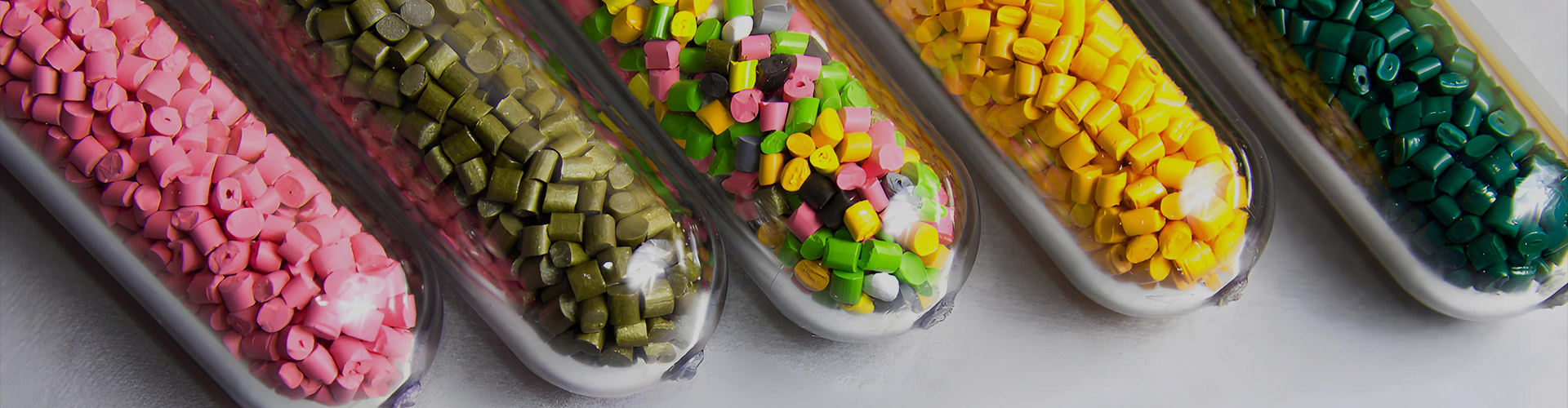
Staple Fiber Reinforcement
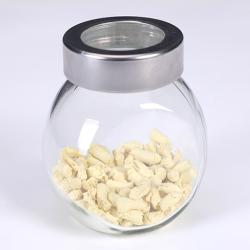
Staple Fiber Reinforcement
APM40 — pre-dispersed aramid pulp fiber, matched to your base polymer
Conveyor belts, hoses, and molded rubber parts need reinforcement that won't add bulk. Staple fiber reinforcement delivers that by dispersing short, high-strength fibers evenly through the rubber matrix, boosting dimensional stability, tear resistance, and modulus while keeping the compound moldable and workable.
APM40 is our pre-dispersed aramid pulp fiber masterbatch, supplied at 40% active fiber content across four carrier-matched grades — EPDM, NBR, NR, and CR — so the carrier chemistry lines up with your base rubber for smoother incorporation.
Technical Specifications
| APM40 (all grades) | |
|---|---|
| Aramid Pulp Fiber Content | 40% |
| Carrier and Dispersing Agent | 60% |
| Appearance | Yellow particles |
| Recommended Dosage | 2.0–20.0 phr |
| Packing / Storage | 15 kg carton with PE bag liner; cool, dry storage, 2-year shelf life |
Choose the Grade That Matches Your Base Polymer
| Grade | Carrier Matched To | Typical Application |
|---|---|---|
| APM40/EPDM | EPDM | Belts, hoses, and other rubber products |
| APM40/NBR | NBR | Rubber rollers, hoses, washers, and other rubber products |
| APM40/NR | NR | Special tires and other rubber products |
| APM40/CR | CR | Belts, hoses, washers, and other rubber products |
Selection Guide of Staple Fiber Reinforcement
Match the carrier to your base rubber
All four grades carry the same 40% active aramid pulp fiber — the difference is the carrier system, matched to EPDM, NBR, NR, or CR. Choosing the grade that matches your base polymer supports smoother incorporation and more even fiber dispersion during mixing.
Dial in dosage to your reinforcement target
The wide 2.0–20.0 phr range reflects how differently reinforcement needs vary by product — a lightly reinforced hose sits at the lower end, while a product needing significant dimensional stability, like specialty tires, may run toward the higher end.
Frequently Asked Questions
1. What's the difference between the four APM40 grades?
The active aramid fiber content (40%) is identical across all four — only the carrier system changes, formulated to match EPDM, NBR, NR, or CR base rubber for better compatibility and dispersion.
2. Why use pre-dispersed aramid pulp instead of adding fiber directly?
Raw aramid pulp fiber is difficult to disperse evenly on its own and prone to clumping. Pre-dispersing it into a carrier masterbatch makes it far easier to incorporate uniformly during mixing, which is what actually delivers the reinforcement benefit.
3. What happens at the low end versus the high end of the dosage range?
Lower dosages provide a modest reinforcement boost while preserving flexibility and moldability. Higher dosages increase dimensional stability and tear resistance more significantly but can affect processability, so it's worth testing within your specific compound rather than defaulting to the top of the range.
4. Can APM40 be used in thermoplastic rubber, not just conventional rubber?
Yes — in addition to natural and synthetic rubber, APM40 is also suitable for thermoplastic rubber systems, providing the same reinforcing effect.
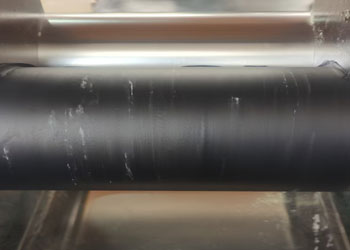
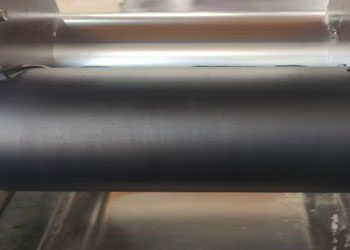
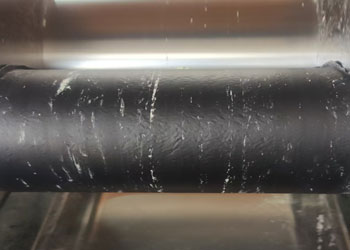
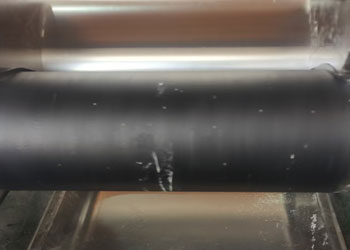
Comparison of roll kneading performance with powder products
Comparison of roll kneading performance with powder products |
| 10 seconds later | 30 seconds later | 60 seconds later | |
| MASTERBATHCES | 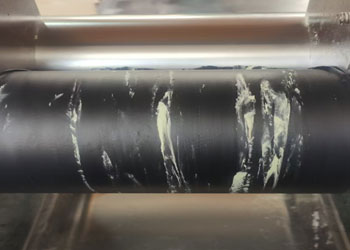 |
 |
 |
| POWDER | 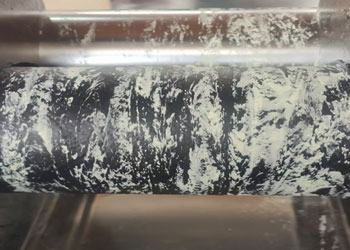 |
 |
 |