+8613706519013
 BHC Polymer Additives Co., Ltd / Shanghai Crystal Wells Chemical New Materials Co., Ltd.

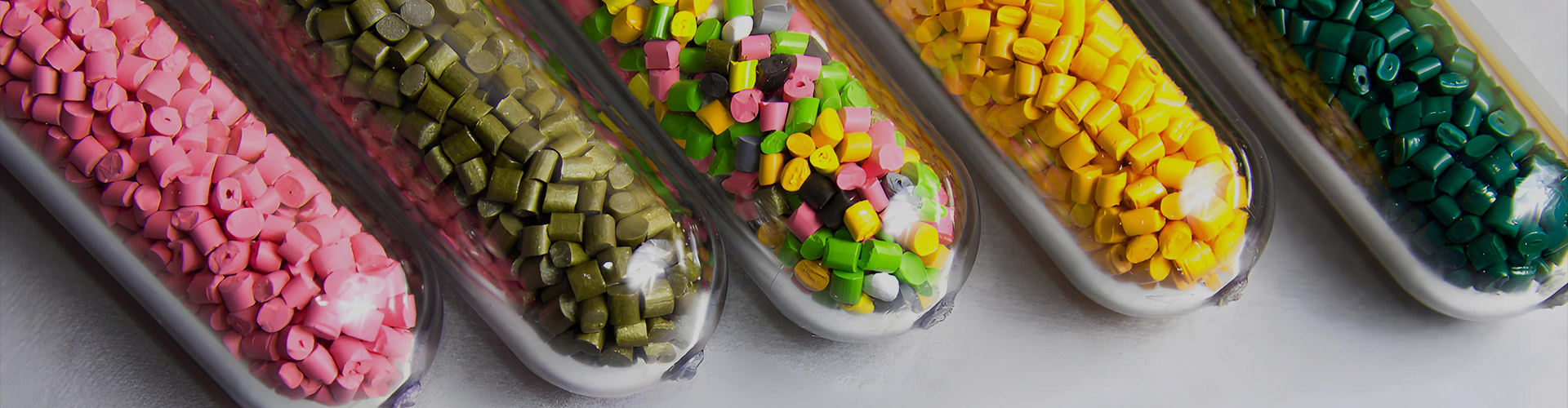
Anti-scorching Agent


Anti-scorching Agents
Scorching — the premature onset of vulcanization during mixing, extrusion, or storage — can waste an entire batch of compound if processing runs hot or slow for too long. Anti-scorching agents (scorch retarders) buy back that safety margin by delaying the start of cure without meaningfully affecting the final cure rate or cured properties, letting extruders and calenders run faster and hotter without the risk of premature crosslinking.
We offer two pre-dispersed scorch retarders: CTP(PVI)-80, the industry-standard retarder chemistry, and E-80, a non-discoloring, eco-friendly alternative suited to light-colored and specialty elastomer applications.
Product Comparison
| Parameter | CTP(PVI)-80 | E-80 |
|---|---|---|
| Composition | 80% N-cyclohexylthiophthalimide, 20% carrier and dispersing agent | 80% N-phenyl-N-(trichloromethylthio)benzenesulfonamide, 20% carrier and dispersing agent |
| Appearance | Beige particles | Beige particles |
| Density | ≈1.13 g/cm³ | ≈1.29 g/cm³ |
| Recommended Dosage | 0.2–2.0 phr | 0.2–2.0 phr |
| Best Paired With | Sulfonamide or thiazole accelerator systems | Thiazole and thiuram accelerator systems; thiuram vulcanization systems especially |
| Distinguishing Trait | Industry-standard retarder, widely proven across NR and synthetic rubber | Non-discoloring, suited to light-colored products; strong fit for EPDM, NBR, HNBR |
| Application | General natural and synthetic rubber processing | Tires, conveyor belts, shoe soles, molded and extruded products |
Selection Guide of Anti-scorching Agents
Choose CTP(PVI)-80 for general-purpose scorch protection
The established, widely proven choice when your compound runs a sulfonamide or thiazole primary accelerator. It delays scorch onset with minimal effect on overall cure time or vulcanizate performance, and also improves storage stability of unvulcanized stock.
Choose E-80 for light-colored or specialty elastomer compounds
E-80 does not discolor or stain, making it the right choice when appearance matters. It performs particularly well in EPDM, NBR, and HNBR, and can also raise crosslink density and tensile strength while lowering compression set in EPDM and NBR compounds.
Frequently Asked Questions
1. Does adding a scorch retarder slow down my overall cure time?
No — both CTP(PVI)-80 and E-80 are designed to delay the onset of cure without meaningfully affecting the total cure time or the final vulcanizate properties once curing begins.
2. Why would I choose E-80 over CTP(PVI)-80?
The main reason is color: CTP(PVI)-80 can affect appearance in some systems, while E-80 is formulated not to discolor, making it suitable for light-colored products. E-80 is also a stronger fit for EPDM, NBR, and HNBR compounds and thiuram-based cure systems.
3. Can these retarders help recover rubber stock that has already been exposed to high heat?
CTP(PVI)-80 has a documented rejuvenating effect on rubber that has been exposed to high temperatures due to seasonal conditions, handling, or improper operation, helping recover compound that might otherwise be at risk of scorching.
4. What dosage range should I start with?
Both products are typically dosed at 0.2–2.0 phr. The right point within that range depends on how much additional scorch safety your process needs — our technical team can help you dial in a starting point based on your mixing and processing conditions.
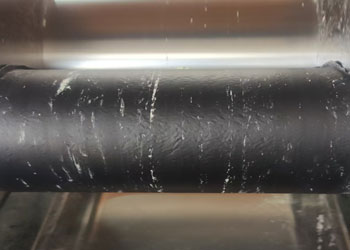
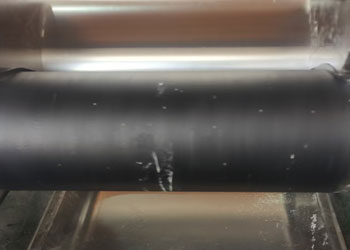
Comparison of roll kneading performance with powder products
Comparison of roll kneading performance with powder products |
| 10 seconds later | 30 seconds later | 60 seconds later | |
| MASTERBATHCES | 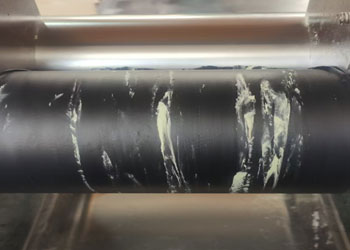 |
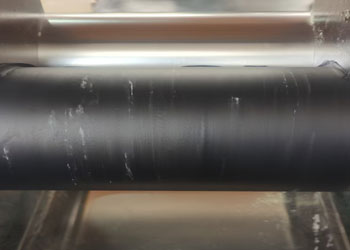 |
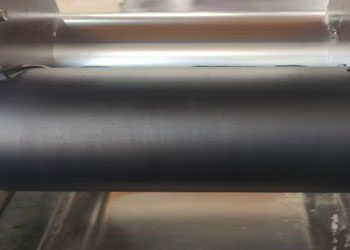 |
| POWDER | 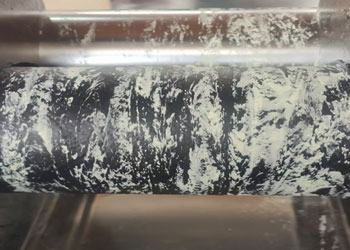 |
 |
 |