+8613706519013
 BHC Polymer Additives Co., Ltd / Shanghai Crystal Wells Chemical New Materials Co., Ltd.


Homogenizing Agent

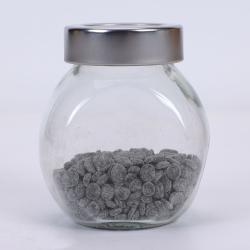
Homogenizing Agents
When a rubber compound blends polymers of different polarity — or incorporates reclaimed and recycled rubber alongside virgin material — poor compatibility between those components can leave weak spots, uneven filler distribution, and inconsistent physical properties in the finished product. Homogenizing agents solve this by softening and infiltrating the polymer interface, letting molecules of different polarity move more freely against one another so the blend mixes into a genuinely uniform compound.
We offer two hydrocarbon-based homogenizing agents, HA-100 and HA-40, both REACH-compliant and built on the same chemistry — a blend of polar aliphatic, naphthenic, and aromatic hydrocarbon components — but differentiated by softening point range for different blending scenarios.
Product Comparison
| Parameter | HA-100 | HA-40 |
|---|---|---|
| Composition | Mixture of polar aliphatic, naphthenic, and aromatic hydrocarbons | Mixture of polar aliphatic, naphthenic, and aromatic hydrocarbons |
| Appearance | Black particles or flakes | Black particles |
| Softening Point | 98–118°C | 95–106°C |
| Ash / Heating Loss | ≤2% / ≤0.5% | ≤2% / ≤0.5% |
| Density | ≈1.06 g/cm³ | ≈1.06 g/cm³ |
| Recommended Dosage | 3.0–8.0 phr | 3.0–8.0 phr |
| Best Suited For | Blends involving reclaimed or recycled rubber content | General-purpose blending for consistent, uniform mixes |
What Homogenizing Agents Do in the Compound
Improves polymer compatibility
Softens and infiltrates the interface between polymers of different polarity, letting molecules move relative to one another so the blend mixes more completely.
Improves filler dispersion
Raises the carbon black loading the compound can accept while improving how evenly it disperses, and helps prevent filler agglomeration during mixing.
Increases initial tack
Improves the initial viscosity of the compound, boosting stickiness where it's needed for downstream processing.
Cuts mixing energy and cost
Improves overall processing behavior and mixing efficiency, which translates into lower energy consumption and reduced production costs.
Frequently Asked Questions
1. What's the practical difference between HA-100 and HA-40?
Both share the same hydrocarbon-based chemistry and dosage range, but HA-100 has a higher softening point (98–118°C) and is positioned for blends that include reclaimed or recycled rubber, while HA-40's lower softening point (95–106°C) suits general-purpose blending where consistent, uniform mixing is the main goal.
2. Why does softening point matter when choosing between them?
Softening point affects how the homogenizer behaves at your mixing temperature. A higher softening point grade like HA-100 stays effective across a broader, higher temperature window, which is useful when blending in reclaimed rubber that may need more heat to process evenly.
3. At what stage of mixing should these be added?
Homogenizing agents are typically added early in the mixing cycle, alongside the fillers, so they can act on polymer compatibility and filler dispersion from the start of the process.
4. Are HA-100 and HA-40 suitable for light-colored rubber products?
Both are black in appearance, so they're intended for dark and black rubber goods such as tires, conveyor belts, and hoses rather than light-colored compounds where visible color would be a concern.
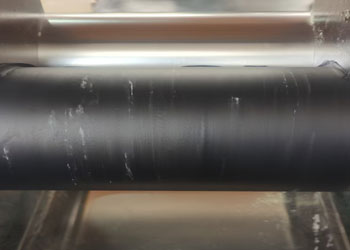
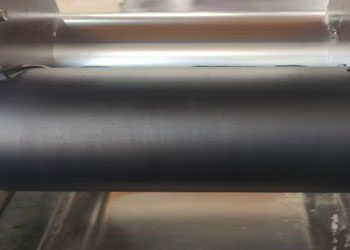
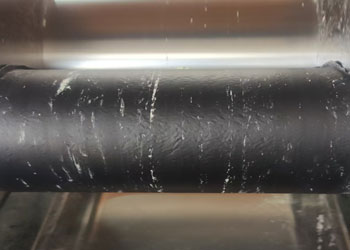
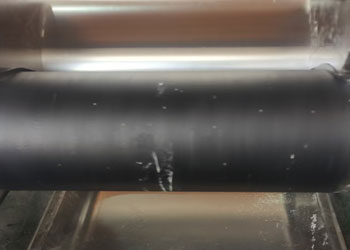
Comparison of roll kneading performance with powder products
Comparison of roll kneading performance with powder products |
| 10 seconds later | 30 seconds later | 60 seconds later | |
| MASTERBATHCES | 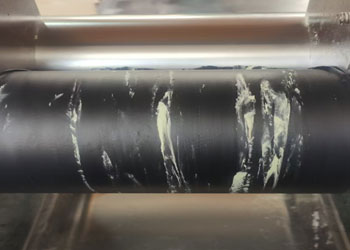 |
 |
 |
| POWDER | 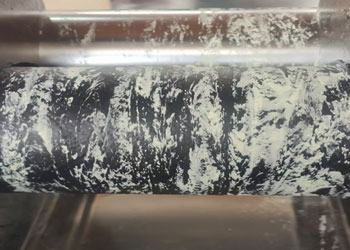 |
 |
 |