+8613706519013
 BHC Polymer Additives Co., Ltd / Shanghai Crystal Wells Chemical New Materials Co., Ltd.

Blowing Agent

Chemical Blowing Agents for Rubber
Blowing agents generate gas during vulcanization to create the cellular structure behind sponge and foam rubber — sports equipment, insulation, shoe soles, and cushioning products. Getting the right cell structure comes down to matching the agent's decomposition temperature to your process: too early and the gas escapes before the compound sets; too late and it can't expand properly.
We offer two pre-dispersed blowing agents that cover the full temperature range compounders need — AC3000-75 for high-temperature molding, and OBSH-75 for lower-temperature, heat-sensitive processes.
Product Comparison
| Parameter | AC3000-75 | OBSH-75 |
|---|---|---|
| Composition | 75% azobisformamide (AC/ADCA), carrier and dispersing agent | 4,4'-oxybis(benzenesulfonyl hydrazide) (OBSH), carrier and dispersing agent |
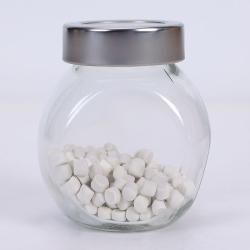
| Appearance | Orange particles | Gray-white particles |
| Density | ≈1.35 g/cm³ | ≈1.25 g/cm³ |
| Decomposition Temperature | ≥200°C | 150–164°C |
| Recommended Dosage | 3–10 phr | 2–15 phr |
| Best Suited For | High-temperature molding; sports equipment, insulation materials, shoe materials | Heat-sensitive compounds; microcellular rubber sole, electrically insulating foam products |
Selection Guide for Chemical Blowing Agents
Choose AC3000-75 for high-temperature molding
With a decomposition temperature of 200°C or above, AC3000-75 suits both atmospheric and pressure foaming processes that run hot. It's non-staining, non-corrosive to molds, and delivers a uniform cell structure with a smooth surface — a strong fit for sports equipment, insulation, and shoe materials.
Choose OBSH-75 for lower-temperature, sensitive compounds
OBSH-75 begins foaming at just 150°C, well below AC3000-75, making it the choice when your compound can't tolerate high-temperature processing. It also brings good electrical insulation properties and a fine, uniform cell structure, and is commonly used in microcellular rubber sole production.
Frequently Asked Questions
1. How do I know which decomposition temperature I need?
Match the blowing agent's decomposition temperature to your actual cure or molding temperature — if your process runs at or above 200°C, AC3000-75 is the fit; if your compound needs to foam at a lower temperature, around 150–164°C, OBSH-75 is the better choice.
2. Can AC3000-75 and OBSH-75 be used together?
Yes — OBSH-75 is designed to be uniformly dispersible in rubber and can be used alongside other foaming agents, which allows compounders to fine-tune the foaming profile across a broader temperature window than either agent alone.
3. Does either blowing agent affect the color of the finished product?
AC3000-75 is specifically non-staining to the finished product despite its own orange particle color. Both agents are formulated to decompose without leaving discoloring residue in the cured compound.
4. What gas is released during decomposition?
Both agents release nitrogen gas as they decompose, which forms the cellular structure inside the rubber compound during vulcanization.
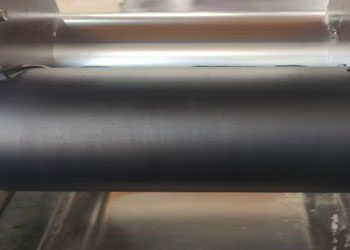
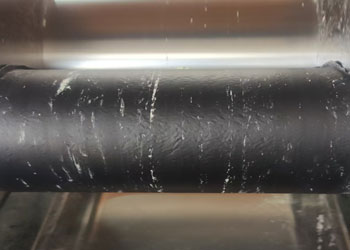
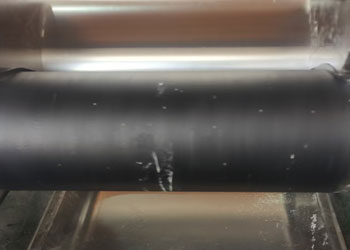
Comparison of roll kneading performance with powder products
Comparison of roll kneading performance with powder products |
| 10 seconds later | 30 seconds later | 60 seconds later | |
| MASTERBATHCES | 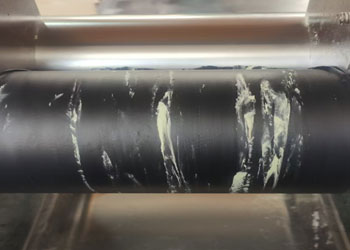 |
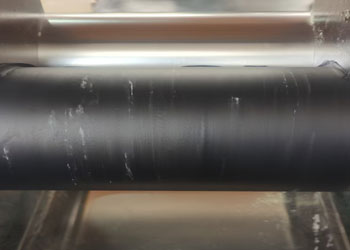 |
 |
| POWDER | 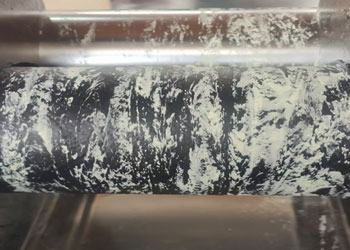 |
 |
 |